Why Coat Length Is the Hardest Autumn Purchase When You Are Tall
Quick Answer: Coats are the hardest garment for tall frames because outerwear grading adds far less length per size than it adds width - a size up gets you a couple of inches in the chest and often under an inch in the body. Worse, the visual landmarks that make a coat read as intentional are proportional, not absolute: a coat needs to end clearly above, clearly below, or clearly past the knee, and on a longer leg the standard length lands in the ambiguous zone between two of them. The fix is choosing a length category and sizing for the shoulder, then treating the hem as an alteration - not searching for a coat that happens to fit everywhere at once.
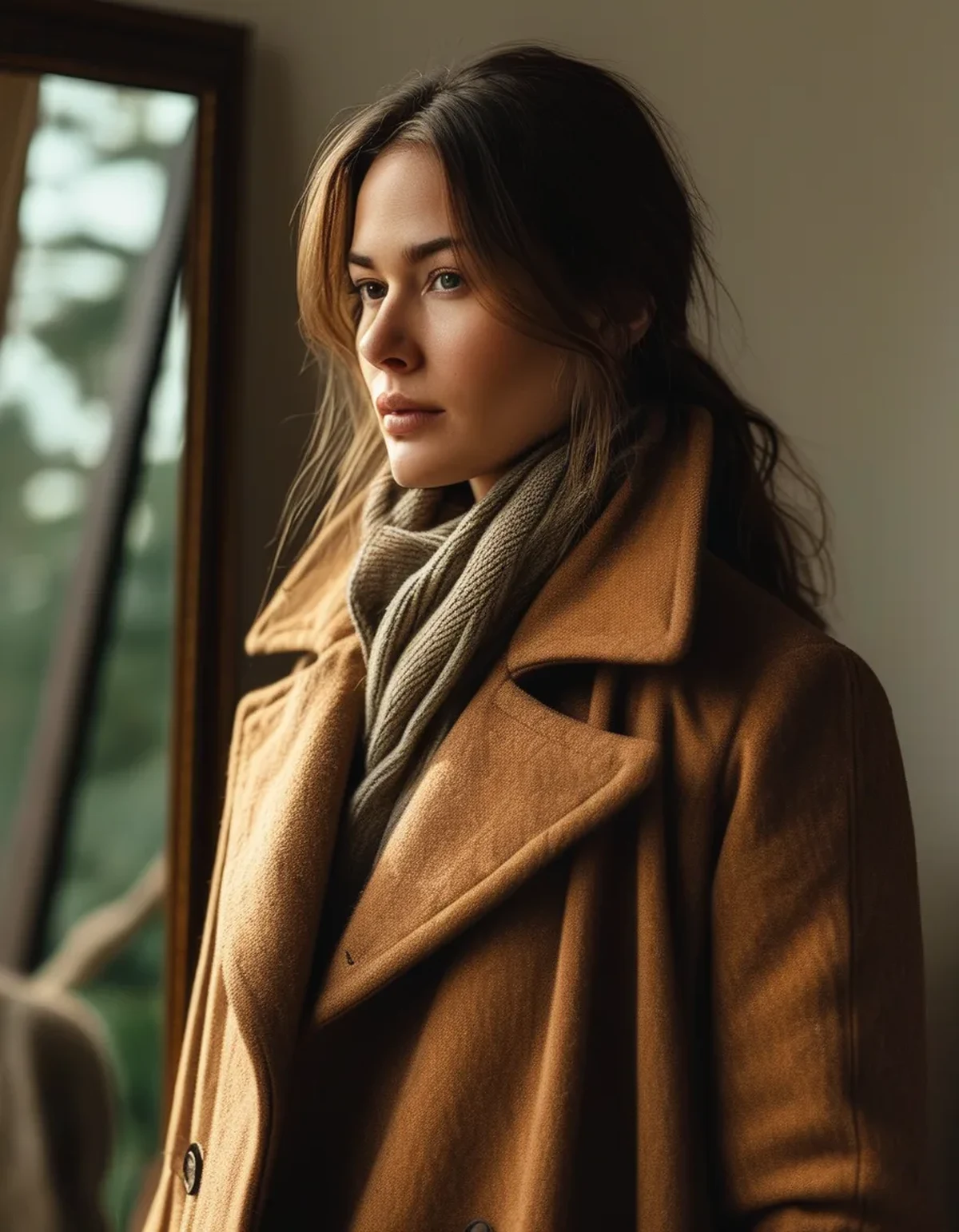
You try on the coat. The shoulders are right, the sleeves are almost right, and the hem is doing something you cannot name but definitely do not like.
It is not in your head, and it is not that you are hard to fit. It is that coats are graded in a way that works against you specifically.
Why does a size up fix the width but never the length?
Because grading rules add most of the increment across the body and very little down it.
When a brand produces a size run from one sample size, it applies a grade - a set of rules for how each measurement changes between sizes. Circumference measurements typically grow by an inch or two per size. Vertical measurements grow far less, often half an inch or less in the body length, because the industry assumes width varies more between customers than height does.
For most garments that assumption is survivable. For outerwear it is not, because outerwear is the garment where length is the entire design statement.
So the size up gives you a coat that is loose through the body, slightly long in the sleeve, and still ending in the same wrong place relative to your knee. You have solved a problem you did not have.
There is a second, quieter issue. Coats are constructed with more internal structure than other garments - interfacing, shoulder support, lining, sometimes canvas. That structure means the coat holds its own shape rather than draping to yours, so the mismatch shows more clearly than it would in a soft knit.
And the pocket placement gives it away. Pockets are positioned relative to the coat’s own proportions. On a longer torso, welt pockets that were designed to sit at the natural hand position land noticeably high, which reads as a fit problem even when the wearer cannot say why.
The useful reframe: you are not looking for a longer version of the same coat. You are looking for a coat designed at a length category that survives being on you.
What are the length categories that actually work?
Three of them, and the failure is always in the space between two.
Cropped or hip-length, ending clearly above the hip bone or right at it. On a tall frame this reads as deliberately short and modern, and it works - but only if it is clearly short. A cropped coat that lands two inches below where a cropped coat should is just a short coat.
Mid-thigh, ending decisively between hip and knee. This is the most forgiving category for tall frames because it has the widest visual tolerance. Anywhere in the middle third of the thigh reads as intentional.
Below the knee or full length, ending at mid-calf or lower. This is the category tall frames wear better than anyone, and it is the one most worth buying properly.
The failure zone is the knee itself, and it is exactly where standard-grade coats land on longer legs. A hem that grazes the kneecap, or sits an inch or two above it, cuts the leg at its widest visual point and shortens the line. It also moves as you walk, which is why it looks fine standing in the fitting room and wrong in a photograph.
A useful test: stand normally in front of a mirror and look at where the hem falls relative to your knee. If you have to think about which category it is in, it is in the failure zone. Certainty is the signal.
One more thing that catches people out: the same coat on the same body reads longer with flat shoes and shorter with a heel. Decide the length in the shoes you will actually wear it with, which for an autumn coat is usually a boot with some sole height.

What Nobody Tells You About Tall Outerwear
The sleeve is the giveaway, not the hem. Most people notice the hem first because it is a large surface, but an observer reads the sleeve as the fit signal. A sleeve ending above the wrist bone reads as a too-small coat regardless of how well the rest fits. If you can only fix one measurement, fix the sleeve.
Tall ranges are inconsistent between brands and often stop at the wrong garment. Many brands with a genuine tall range for trousers do not extend it to outerwear, because outerwear is expensive to produce and the volume does not justify a second grade. Check whether the tall range actually includes coats before you build hope around a brand.
Men’s outerwear is a legitimate option and an underused one. Men’s coats are graded on a longer body and longer sleeve as standard. The shoulder will usually be too wide by a size or two, but shoulder narrowing is one of the more feasible alterations on a coat and the length comes free.
Lengthening a coat is usually impossible; shortening is usually easy. Coat hems are finished with lining, interfacing and sometimes a facing, and there is rarely enough turned-up fabric to let down. Buy long and shorten - the reverse strategy of what most people instinctively try.
Vertical lines within the coat matter more on a longer frame. A single-breasted coat with a clean center front, a long lapel roll, or a belted waist all extend the vertical read. Wide horizontal details - a yoke, a contrast band, a wide patch pocket - cut it, and they cut it more visibly on a tall frame because there is more line to interrupt.
How should you actually shop for it?
Fit the shoulder, accept the hem as an alteration, and know your three numbers before you go.
The shoulder seam is the non-negotiable. It should sit at the outer edge of your shoulder, where the arm begins. A shoulder that is wrong cannot be fixed affordably, whereas hem length, sleeve length and even body width can all be adjusted. Everything else is negotiable; this is not.
Know three measurements before shopping: your shoulder-to-hem preference for each of the three length categories, your sleeve length from shoulder seam to wrist bone, and your back length from the base of the neck. Written in your phone. Most online outerwear listings include a garment length measurement, and having your numbers turns a guess into an arithmetic check.
Budget the alteration into the purchase price. A hem shortening on a lined coat is a modest cost; a sleeve shortening with a cuff detail or a functional buttonhole is more. A coat that fits after a fifty dollar alteration is a better buy than one that never fits.
Try it with the layer you will wear underneath. Autumn coats get worn over a knit in October and a heavier layer in December. A coat fitted over a t-shirt in an August fitting room will be tight in the shoulders by November.
Buy the long one properly and buy it once. The below-the-knee coat is the category where tall frames have a genuine advantage - the length that overwhelms a shorter frame is simply proportional on yours. That is the coat worth the money, and it is worth waiting for the right one rather than settling for an acceptable mid-length in September.
And sit down in it in the fitting room. A coat that is right standing and pulls across the back seated is going to annoy you on every commute of the season.
FAQ: Tall Coat Questions, Answered
Should I size up to get length in a coat?
Generally no. Sizing up adds one to two inches of circumference and often under an inch of length, so you get a loose coat that still ends in the wrong place. The exception is when you are also planning a tailor visit: sizing up for length and having the body taken in works, but only if the shoulder still sits correctly at the larger size.
Can a tailor lengthen a coat that is too short?
Rarely. Coat hems are finished with lining and interfacing and usually have very little turn-up to release - typically under an inch, if any. Some tailors can add a contrasting band or a faced extension, but it is visible and it is a design decision rather than a repair. Buy long and shorten instead.
What length is safest if I can only own one autumn coat?
Mid-thigh. It has the widest zone of visual tolerance, it works over both trousers and dresses, and it avoids the knee entirely. If you already own a mid-thigh coat and want a second, go long rather than short - the below-knee length is the one that is hardest to find and best on a tall frame.
Do belted coats work on tall frames?
Yes, and often better than on shorter frames, because a belt creates a horizontal break that a long line can absorb. The thing to check is where the belt loops sit - they are placed at the pattern’s natural waist, which on a long torso can land above yours. If the belt sits at your ribs rather than your waist, that is a proportion mismatch no amount of tying will fix.
TL;DR:
- Coat grading adds width fast and length slowly, so sizing up gets you a loose coat that still ends in the wrong place.
- Three length categories work: clearly cropped, decisively mid-thigh, or below the knee. The knee itself is the failure zone.
- Fit the shoulder seam first - it is the one measurement that cannot be affordably altered.
- Buy long and shorten. Lengthening a lined coat is usually impossible.
- The sleeve is what observers read as the fit signal, more than the hem.
- Men’s outerwear is graded longer and shoulder narrowing is a feasible alteration.
- Try it over a November layer, not an August t-shirt.
The coat is not failing because of your height. It is failing because the grade rules assumed you were someone else.
Keep Reading
This article is for general informational and styling purposes only. Fit, sizing, and product availability may vary.
