Why Dresses That Fit Your Shoulders Are Always Too Short
Quick Answer: Garment sizing grades width far more than length. Going up a size typically adds only half an inch to an inch of body length while adding two to four inches of width - so the dress that finally reaches your knee is now loose in the shoulders, wide at the waist, and dropped at the armhole. The real solutions are buying by shoulder and bust fit and altering nothing (choosing styles where length matters less), buying tall-specific ranges, or accepting a hem you can live with in a style that does not depend on hem placement.
Understanding the grading rule is what stops the endless size-up cycle, because it explains why the strategy cannot work.
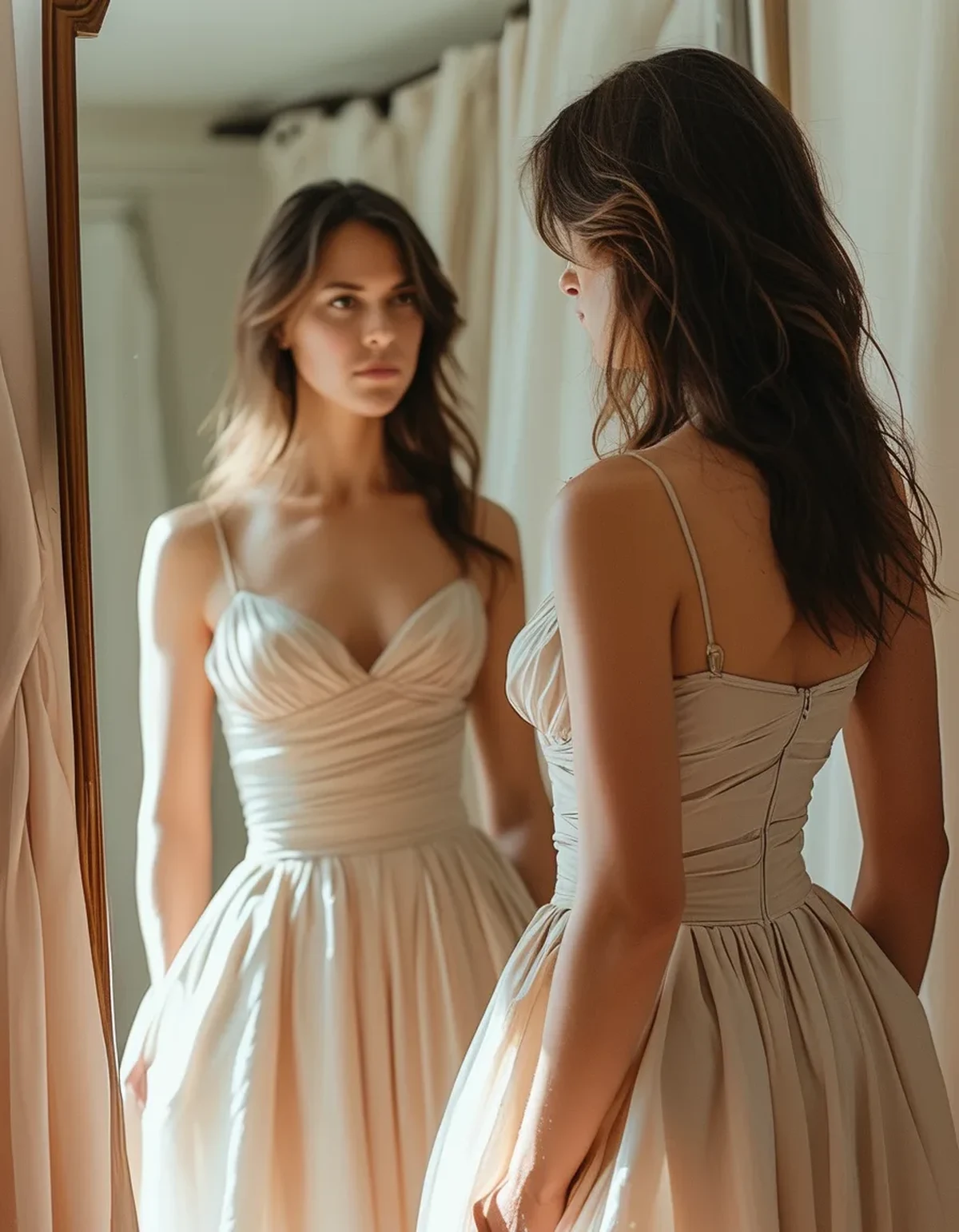
Why does sizing up barely add any length?
Because pattern grading assumes bodies get wider faster than they get longer.
Standard grading adds width in every size step - typically 1 to 2 inches at bust, waist, and hip - while adding only a fraction of that vertically. Bodice length commonly grows about 1/4 inch per size, and total dress length maybe 1/2 to 1 inch.
The math does not work in your favor. If a dress is 4 inches too short, you would need to go up 4 to 8 sizes to fix it by sizing alone. Long before then, the shoulders have fallen off and the waist has landed on your hips.
Vertical proportions move too. Sizing up drops the armhole, moves the waist seam down, and lowers the bust darts. A dress that fits your length but not your frame looks wrong in a way that is hard to name - the seams are simply in the wrong places relative to your body.
Standard patterns are drafted for a specific height. Most straight-size ranges are drafted around a fit model of roughly 5’5” to 5’7” (165 to 170cm). Every inch above that is length the pattern never accounted for.
And short-torso versus long-leg matters. Two women of the same height can need completely different alterations. If dresses hit your waist correctly but end too high, your length is in your legs; if the waist seam sits above your natural waist, the torso is where you need the inches. Knowing which one you are changes what you should buy.
Which styles hide the problem and which expose it?
Some designs depend on hem placement; others barely notice it.
Styles that forgive length: maxi and midi dresses drafted long enough that a few inches of variance still reads as intentional. Wrap dresses, which set the waist by tying rather than by a seam. A-line and fit-and-flare, where the hem is not doing the structural work. Anything with an adjustable waist is a tall woman’s friend, because it removes the worst of the vertical alignment problem.
Styles that expose it immediately: bodycon and sheath dresses, where a rising hem changes the entire read of the garment. Anything with a defined waist seam, which must land at your actual waist. Structured shirt dresses, where button placement is fixed and cannot be renegotiated.
Shirt dresses deserve a specific warning. They combine a fixed button placket, a fixed waist, and a hem that is often short to begin with - three constraints stacking against you at once.
Drop-waist and empire lines are unpredictable. Both put a seam at a place that shifts a lot with height, so they either work beautifully or look bizarrely off, with very little middle ground. Try, do not order.
And the tights-and-boots solution is legitimate. A dress that reads too short bare-legged often reads perfectly intentional with opaque tights and boots - which is the entire reason autumn is an easier dressing season if you are tall.
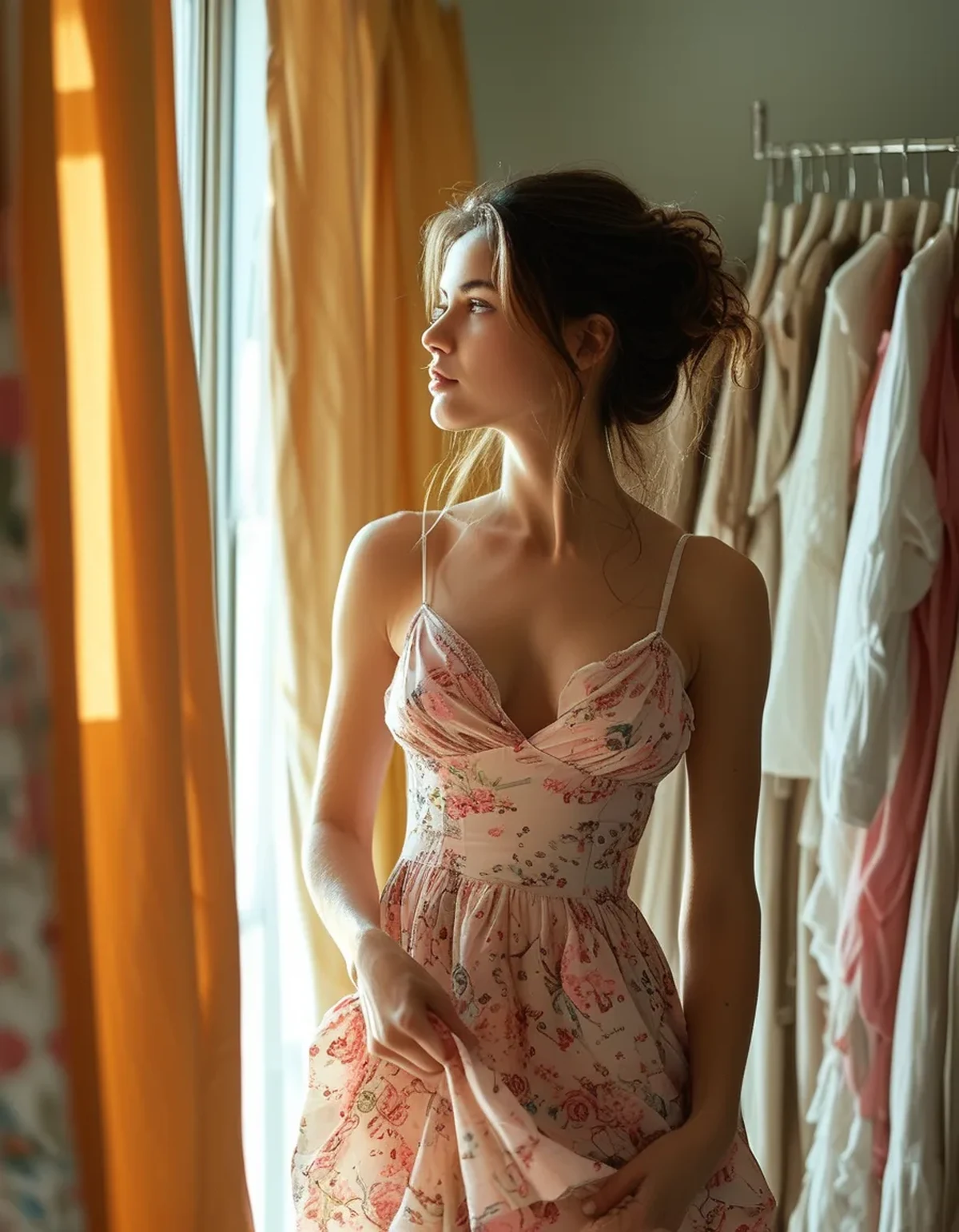
5 Things Nobody Tells You About Tall Dress Shopping
1. Tall ranges are drafted, not just lengthened. A proper tall range moves the armhole, waist seam, and bust darts, not just the hem. This is why a real tall range fits so much better than a longer standard dress - and why it is worth searching for even when the selection is small.
2. The shoulder seam is the truth-teller. If the shoulder seam sits correctly and the armhole is not gaping or binding, the garment fits your frame; everything below that is a length conversation. Buy for the shoulders and bust, then decide about length separately.
3. Hemming down is often impossible, but hem allowance varies wildly. Cheap fast fashion typically has a half-inch hem with nothing to let out. Better-made dresses sometimes have 1 to 2 inches. Check the hem allowance before you buy - it occasionally turns a near-miss into a fix.
4. Adding length is easier than people think. A skilled tailor can add a contrast hem band, a pleated insert, or a wide facing that reads as a design feature. It costs $25 to $60 typically, and it works best on solid fabrics where the join can look deliberate.
5. Model height on product pages is genuinely useful data. Most retailers state it, and the difference between a dress on a 5’9” model and the same dress on a 5’11” body is predictable. Note which brands use taller models - it correlates with drafting that suits you.
The one that surprises people: buying a size down in a longer style frequently works better than sizing up in a short one. If a maxi is slightly long, that is a $20 hem. If a midi is too short, there is nothing to be done.
What actually works as a strategy?
Stop treating it as a sizing problem and treat it as a sourcing problem.
Learn your two key measurements. Shoulder-to-waist and waist-to-knee, in inches. Compare these against the garment measurements retailers publish. This removes almost all of the guesswork and takes ten minutes once.
Build a shortlist of brands that draft long. Every tall woman eventually has three or four brands that simply work. Finding them takes deliberate trial, and it is worth doing methodically once rather than accidentally over five years.
Budget for alterations as part of the purchase price. A $90 dress plus $40 of tailoring that fits perfectly is better value than three $60 dresses that do not. Taking in the width of a sized-up dress is a routine, affordable alteration - it is the reverse direction that is impossible.
Use the seasonal transition to your advantage. Autumn brings tights, boots, and layering, all of which make hem length far less critical. A dress that was borderline in August is comfortably wearable in October with opaque tights and knee boots, and this is genuinely the best shopping season for tall frames.
And separate the confidence question from the fit question. Plenty of the discomfort in this is about feeling conspicuous rather than about inches. A dress that fits your shoulders and skims your frame reads as deliberate at any hem length; a dress that is technically long enough but hangs off your shoulders reads as borrowed - and that difference is what people actually notice.
FAQ: Tall Dress Fit Questions, Answered
How much length does one size up actually add?
Roughly half an inch to an inch of total garment length in most standard ranges, and about a quarter inch in the bodice. Nowhere near enough to solve a real length gap.
Is it better to buy tall sizes or to alter regular ones?
Tall sizes when available, because the proportions are redrafted rather than stretched. Alterations work well for taking in width, and less well for adding length - which is why buying long and taking in is the more reliable direction.
Why do some brands fit me and others never do?
Each brand drafts to a fit model of a particular height and proportion. Brands whose fit model is closer to your proportions will fit you consistently across their range, which is why sticking with the ones that work saves an enormous amount of time.
Can a tailor add length to a dress?
Sometimes - a contrast band, a pleated insert, or letting out a generous hem. It works best in solid fabrics and on simple hems, and a good tailor will tell you honestly whether it will look intentional or improvised.
TL;DR:
- Sizing up adds width, not length - typically under an inch of body length per size, which is why the strategy cannot work.
- Buy for the shoulder seam and bust, then treat length as a separate problem.
- Favor wraps, A-lines, maxis, and adjustable waists; be wary of shirt dresses, sheaths, and fixed waist seams.
- Learn your shoulder-to-waist and waist-to-knee measurements, build a shortlist of brands that draft long, and budget for tailoring.
The useful reframe is that this is not a body problem or even a size problem - it is a drafting decision made by pattern makers around a 5’6” fit model. And this is the season it matters least: tights and boots turn a borderline hem into a deliberate one, which makes autumn the best time to buy dresses you will still wear next summer.
Keep Reading
This article is for general informational and styling purposes only. Fit, sizing, and product availability may vary.
