Why Layering Reads Bulkier on Tall Frames — and the Fix
Quick Answer: Layering reads bulkier on tall frames because most layering pieces are cut with a fixed length that lands too high on you, creating horizontal breaks at your widest points instead of your narrowest. The fix is choosing layers by where the hem lands on your body, not by size, and making sure your outer layer is longer than your mid layer rather than roughly equal to it.
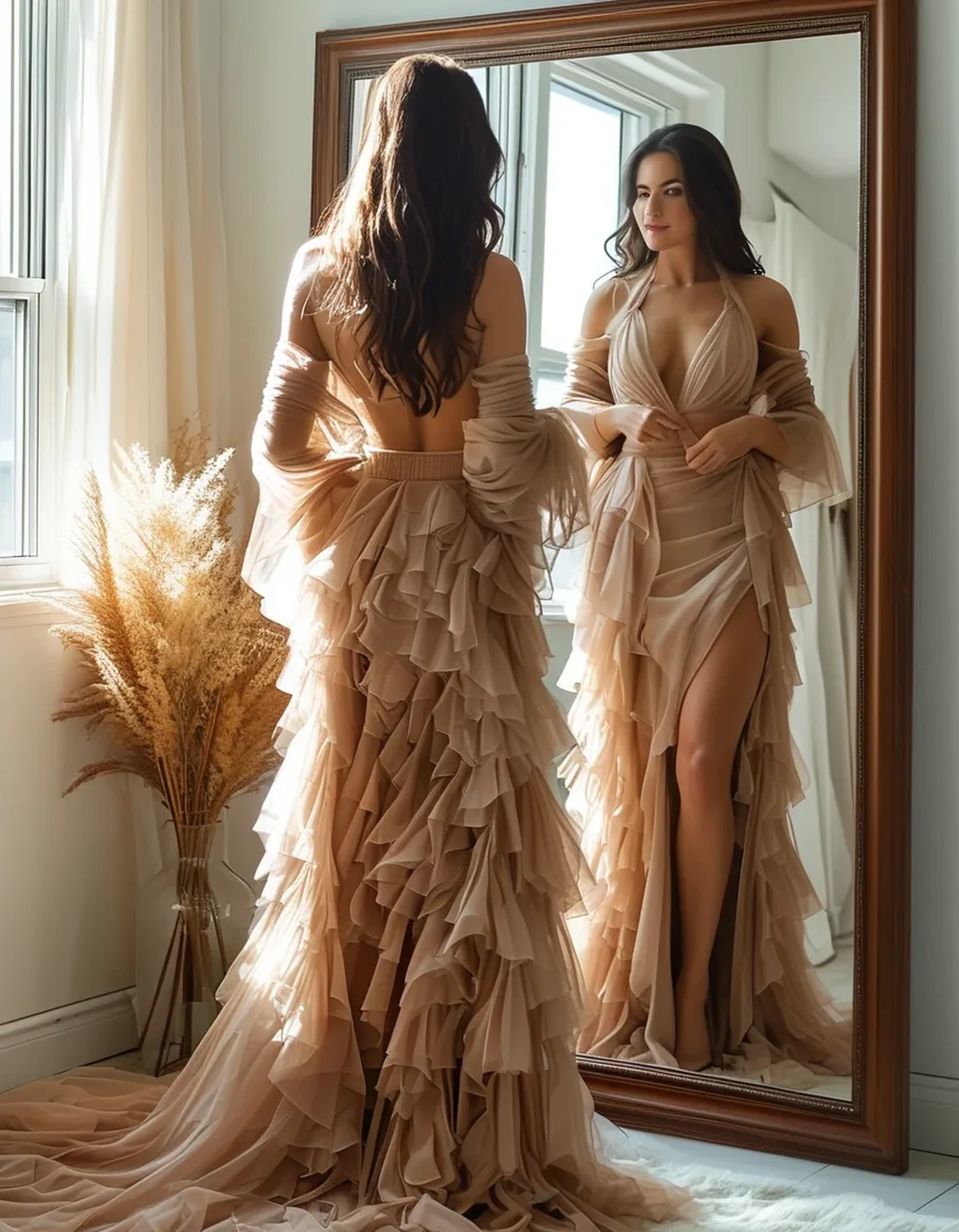
You put on the exact outfit from the photo. Long tee, open cardigan, jacket.
On her it looked relaxed. On you it looks like you are wearing all your clothes at once.
Here is the actual mechanism, and it has nothing to do with your size.
Why does the same outfit look different on a tall frame?
Because layering works by creating vertical lines and deliberate hem breaks, and both of those are length-dependent.
Every layer creates a horizontal line where it ends. Your eye reads horizontal lines as width. On a frame the garment was drafted for, those hems land at planned points — mid-hip, high thigh — that fall between the widest parts of the body. On a taller frame, the same garment rides up relative to your body and those hems land somewhere else entirely, very often across the widest part of the hip.
Layers stack their breaks too close together. Standard cardigan and jacket lengths differ by only a few inches. On a shorter frame that produces a clear, staggered step. On a taller frame, both ride up by a similar amount and the two hems end up nearly level, reading as one thick band rather than two distinct layers.
Torso length is the specific variable, not overall height. Two women of the same height layer completely differently if one carries her height in her legs and the other in her torso. The long-torso frame is where layering fails hardest, because every top is effectively shorter than intended.
Fabric volume scales, but garment length does not. Brands grading up for size add width far more readily than length. A larger size in a chunky knit gives you more bulk without giving you the extra length that would have balanced it — which is precisely the trade that makes layers read heavy.
What actually fixes it?
Three structural changes, in order of how much difference they make.
1. Make each layer decisively longer than the one under it. Not by two inches — by six or more. A clear staggered cascade reads as intentional and creates strong vertical lines. Near-equal hems read as bulk. This single rule fixes more outfits than everything else combined.
2. Keep the innermost layer long enough to sit below the others. The base layer riding up to sit above the mid layer is the most common failure, and it turns a deliberate stack into a scramble. Tall-specific or elongated tees are worth buying in multiples once you find ones that work.
3. Give the outer layer an unbroken vertical line. An open long cardigan, a duster, an unbuttoned longline coat — anything creating two continuous vertical columns down your body — narrows the whole silhouette regardless of what is underneath. Closed, boxy outer layers do the opposite.
4. Shift volume away from the widest point. If a layer must be shorter, better it ends at your natural waist or well below the hip than exactly across it. The hem landing on the fullest part of the hip is the specific placement that reads as width.
5. Vary weight between layers rather than matching it. Three medium-weight pieces read as one thick mass. A fine base, a mid-weight middle and a substantial outer piece read as three separate garments with depth between them.
What Nobody Tells You About Buying Layers When You Are Tall
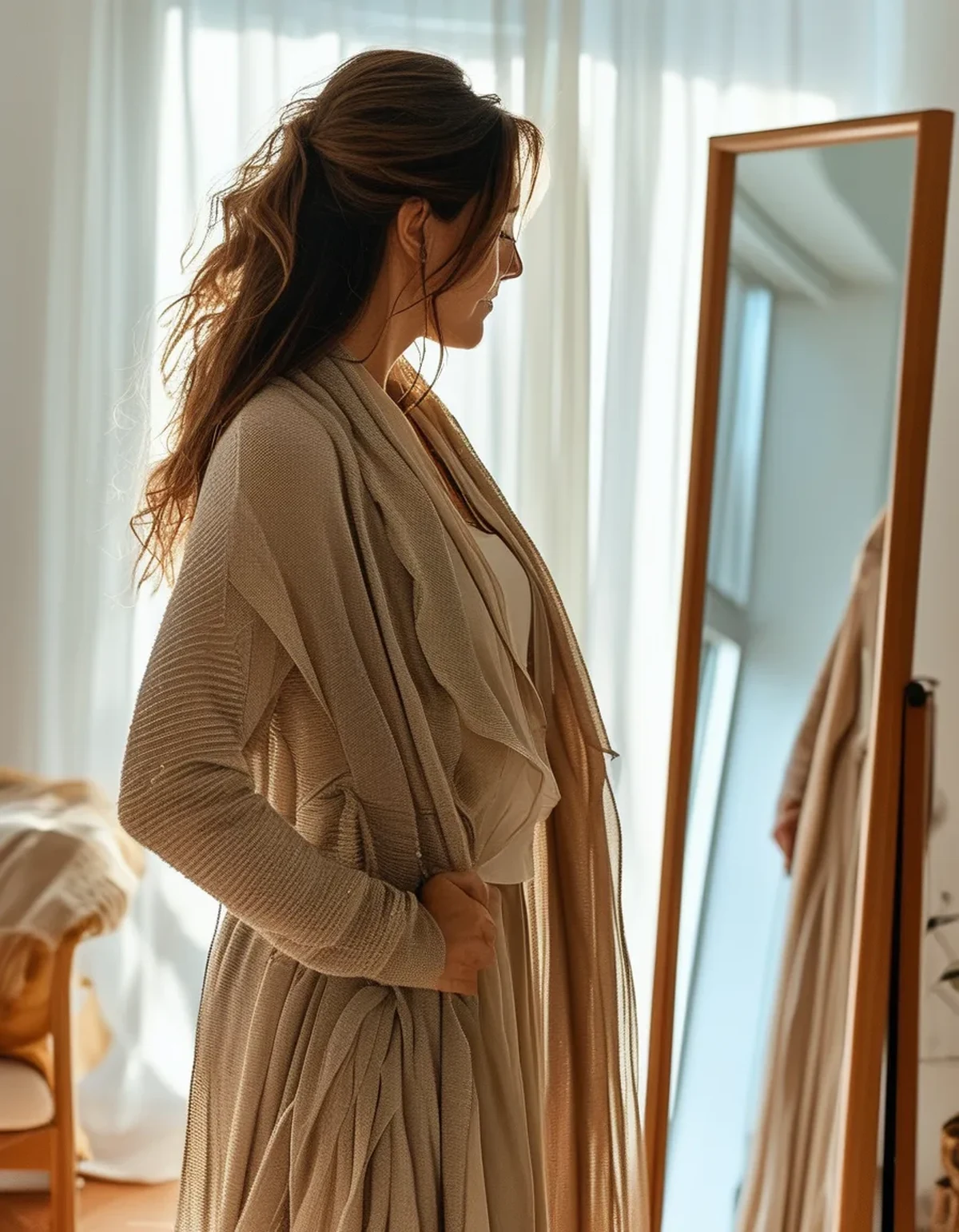
The measurement that matters is not the size — it is the garment length, and most brands publish it. Front length or centre-back length is usually in the product details, and once you know your own reference numbers (where you want a cardigan to land, where you want a jacket to land), online shopping becomes far more reliable than in-store guessing. Write them down once and use them forever.
Buying a size up to get length is a trap that specifically hurts layering. You get width, dropped shoulders and heavier drape — all of which add bulk — for maybe an inch of extra length. Longline or tall-specific cuts solve the actual problem.
Oversized means something different on you. A piece designed to look voluminous on a shorter frame frequently just looks correctly fitted on yours, which is fine — but do not expect it to deliver the intended slouchy effect. If you want genuine oversize, you need to go further than the styling photo suggests.
Men’s and unisex outerwear is genuinely useful for length. The sleeve and body length is often much closer to what you need, and the fit through the shoulder is worth trying before dismissing.
Sleeve length ruins layering quietly. A jacket sleeve that ends above your wrist bone makes every layer underneath look mismatched, and it is the detail that most often gives away a layered outfit as not quite right. Pushing sleeves up deliberately is a legitimate fix and looks intentional in a way that a too-short sleeve never does.
Late summer is the best time to solve this. Transitional layering — a light long cardigan over a tee — is far more forgiving than deep winter layering, and it is the ideal window to work out your reference lengths before you need three heavy layers at once.
FAQ: Tall Layering Questions, Answered
Should tall women avoid cropped layers entirely?
No, but pair them deliberately. A cropped layer works when what sits below it is long and creates the vertical line — for example a cropped jacket over a longline tee, not over a similar-length top.
How do I stop the middle layer riding up?
Usually the base layer is too short. Longer base pieces stay put under a mid layer far better, and a slightly narrower base under a looser mid layer reduces friction and bunching.
Is monochrome layering worth it?
It genuinely helps, because it removes the colour contrast at every hem line and lets the silhouette read as one continuous vertical shape. It is the easiest quick win.
What about layering activewear?
Same rules, plus one: a longline layer over leggings works best when it is either well above or well below the widest point of the hip, and a light zip-up left open gives you the vertical line without heat.
Do I need to get things altered?
Hemming down is easy and cheap; adding length is not. That is why buying long and shortening is a far better strategy for tall frames than buying to fit and hoping.
How many layers is too many?
Three distinct lengths is the practical ceiling for most tall frames. Beyond that the hems inevitably start clustering and the whole thing reads as bulk.
TL;DR:
- Bulk comes from hem placement, not size — layers ending near each other read as one thick band.
- Make each layer decisively longer than the one beneath it. Six inches, not two.
- Keep the base layer long enough to sit below everything else.
- Use an open, long outer layer to create unbroken vertical lines.
- Shop by published garment length, not size, and buy long to hem rather than short to hope.
Get the lengths right once, write them down, and every layered outfit after that gets easier.
Keep Reading
This article is for general informational and styling purposes only. Fit, sizing, and product availability may vary.
